Standard Resistor Values
Why there is a 470 Ω resistor but no 450: the values are spaced by ratio, so each one starts where the last one's tolerance ends.
The values you can actually buy
Every through-hole and chip resistor sold comes from one of the E series. Each series divides a decade of resistance into equal ratio steps, then repeats the same figures at 10x, 100x, 1000x and so on. The 22 in E12 gives you 22 Ω, 220 Ω, 2.2 kΩ, 22 kΩ and 220 kΩ, and nothing in between.
E12, ±10%, twelve per decade
10 · 12 · 15 · 18 · 22 · 27 · 33 · 39 · 47 · 56 · 68 · 82
E24, ±5%, twenty-four per decade
10 · 11 · 12 · 13 · 15 · 16 · 18 · 20 · 22 · 24 · 27 · 30 · 33 · 36 · 39 · 43 · 47 · 51 · 56 · 62 · 68 · 75 · 82 · 91
E96, ±1%, ninety-six per decade
100 · 102 · 105 · 107 · 110 · 113 · 115 · 118 · 121 · 124 · 127 · 130 · and 84 more
E24 contains every E12 value plus one between each pair; E96 subdivides again. That nesting is why an assortment kit of E12 values still covers most of what a schematic asks for.
Why the numbers look arbitrary
Each E12 step is about 21% above the one before, which is exactly two 10% tolerances meeting. A resistor marked 47 could measure anywhere from 42 to 52; the next value, 56, covers 50 to 62. No gaps worth worrying about, minimal overlap, twelve values per decade. Once you see that, 4.7 stops looking like a strange number to standardise on.
The kinds you will meet
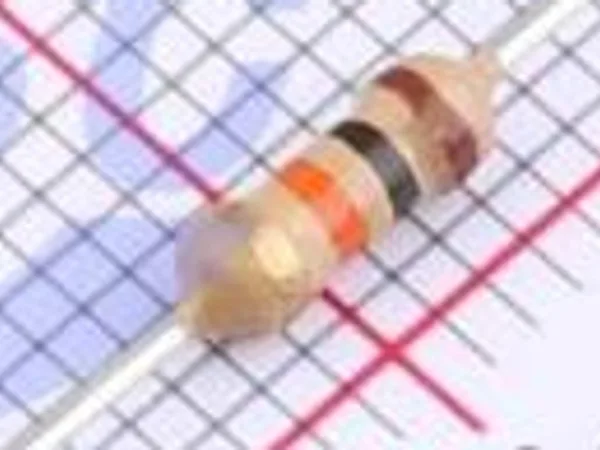
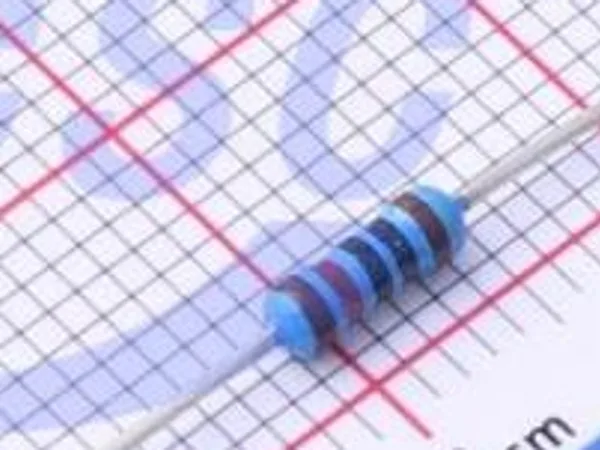
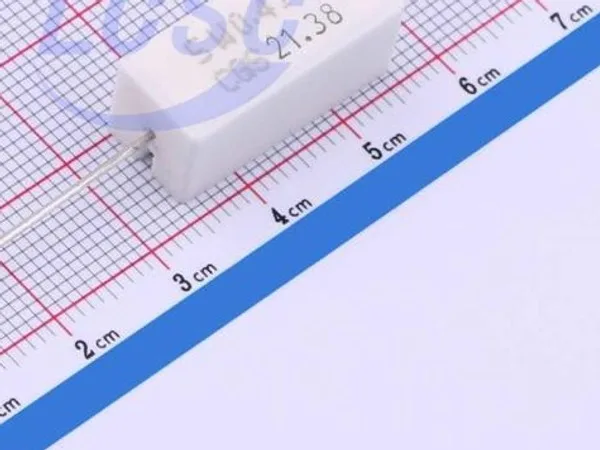
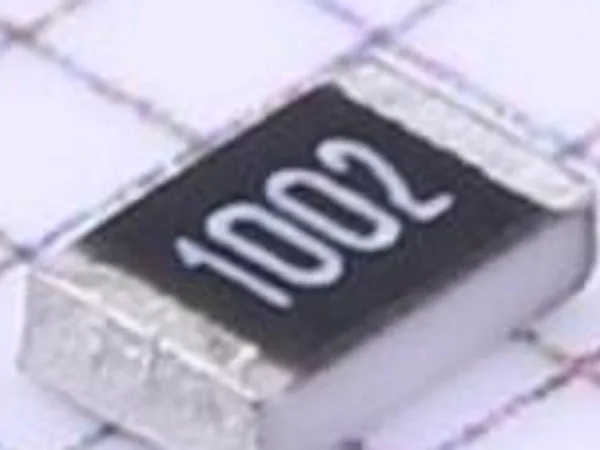
Same value, different construction. What changes is tolerance, stability, noise and how much power it can shed.
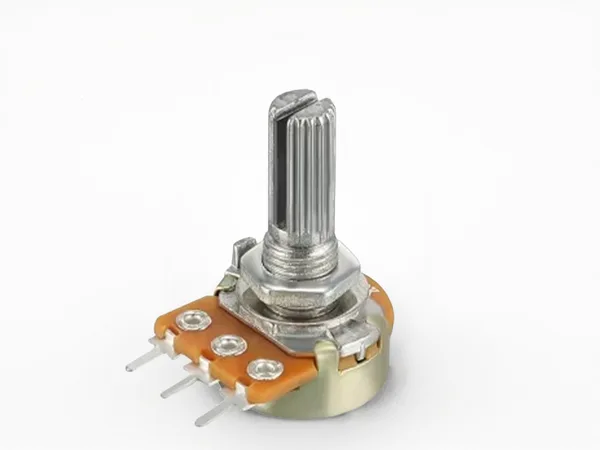
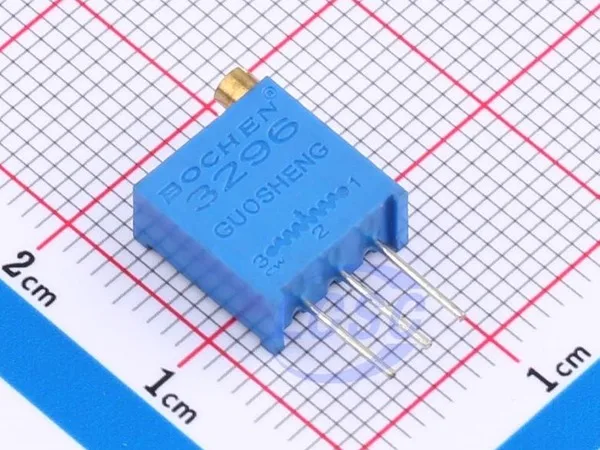
Tolerance bands
| Band | Tolerance | Series | Where you meet it |
|---|---|---|---|
| Silver | ±10% | E12 | old stock and cheap kits |
| Gold | ±5% | E24 | the everyday resistor |
| Brown | ±1% | E96, five bands | dividers, references |
| Red | ±2% | E48 | occasional metal film |
| Green | ±0.5% | E192 | instrumentation |
| Blue | ±0.25% | E192 | precision references |
Reading the bands on a part already in your hand is the color code calculator's job.
Power rating and body size
Through-hole resistors come in standard wattages and the body grows with the rating. The bench rule: pick one rated at least twice the power it will really dissipate, because the printed rating assumes free air and a cool room.
| Rating | Body length | Where it shows up |
|---|---|---|
| 1/8 W | 3.2 mm | dense signal boards |
| 1/4 W | 6.3 mm | the default hobby resistor |
| 1/2 W | 9 mm | LED strings, higher voltage |
| 1 W | 11 mm | power dividers, bleeders |
| 5 W | 22 mm, ceramic block | dummy loads, current sense |
Chip sizes
SMD resistors are named by footprint in hundredths of an inch: an 0805 is 0.08 by 0.05 inches. Below 0603 they stop being comfortable to hand solder, and below 0402 they stop being easy to see.
| Code | Size | Typical rating | Hand soldering |
|---|---|---|---|
| 1206 | 3.2 × 1.6 mm | 0.25 W | easy |
| 0805 | 2.0 × 1.25 mm | 0.125 W | comfortable |
| 0603 | 1.6 × 0.8 mm | 0.1 W | fiddly but fine |
| 0402 | 1.0 × 0.5 mm | 0.063 W | tweezers and patience |
| 0201 | 0.6 × 0.3 mm | 0.05 W | machines only |
Hitting a value you do not stock
Two standard parts in parallel reach almost anything: 5.1 kΩ beside 5.1 kΩ gives 2.55 kΩ, closer to 2.5 k than any E12 value gets. In series they simply add, which is usually the tidier answer. When the exact figure genuinely matters, buy 1% parts instead of chasing combinations, because tolerance stacks faster than intuition suggests.